In mechanical engineering, seconds, micrometers, and downtime minutes often decide outcomes. This makes the field ideal for using AI to support people at work: in production, you get image data (e.g., from cameras); in operation, sensor data (vibration, temperature, flow); and in service, valuable information in reports, documentation, and drawings. From this, AI use cases emerge that increase quality, reduce downtime, and make service processes more predictable.
In this article, we present five AI use cases with manageable pilot effort and particularly fast impact in mechanical engineering:
1. Visual quality inspection with AI: Turning visual checks into a reliable process
In many production environments, visual inspection is a bottleneck: it takes time, depends heavily on individual experience and daily form, and is often carried out only on a sampling basis due to cycle-time constraints. With computer vision – AI that understands images – you flip the script: inspection becomes automated and consistent, applied exactly where it creates the most value, for example right after a critical process step or at the end of the line.
Here’s how it typically works: a camera captures the part, and an AI model detects deviations from the target condition within milliseconds. These can be surface defects such as scratches, dents, contamination, or misassemblies. Depending on the application, the system can also verify dimensions, distances, or completeness. The result is not just “good/bad” but often includes a traceable visual highlight showing where the anomaly is located. That’s crucial, because ejection, rework, and root‑cause analysis in production can be tied directly to a stable, data-driven reference point.
One tangible example is automated real-time sorting and classification: instead of manually separating “good” from “bad” parts, the system makes reliable decisions directly within the process – while simultaneously generating statistics on which defect types are increasing (e.g., after a tool change, a new material batch, or a shift change). This level of transparency turns quality control into more than inspection: it becomes a steering instrument.
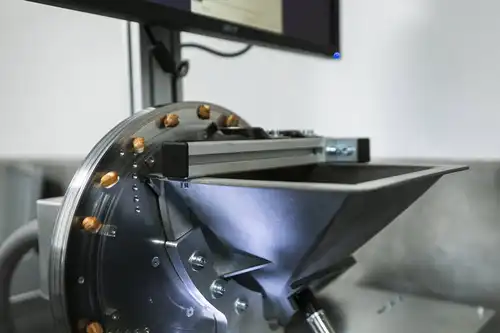
We describe a particularly vivid example in our case study on an AI-driven hazelnut sorting machine. For our customer IFSYS, a special-purpose machine builder, we integrated a custom AI model developed specifically for this application. The result was a sorting accuracy and throughput that had not previously been available on the market – enabling IFSYS to unlock entirely new market opportunities.
If you want to dive deeper into the general use case of “computer vision”, start here: More on the use case “Image Recognition Using AI”.
2. Predictive maintenance & anomaly detection: From schedule‑based to condition‑based maintenance
Unplanned downtime is among the most expensive events in operations, especially for bottleneck equipment or special-purpose machinery. At the same time, purely calendar-based maintenance often creates a dilemma: either parts are replaced too early (cost, effort) or too late (increasing the risk of failure). Predictive maintenance addresses exactly this gap by transforming time-based servicing into condition-based, as-needed maintenance.
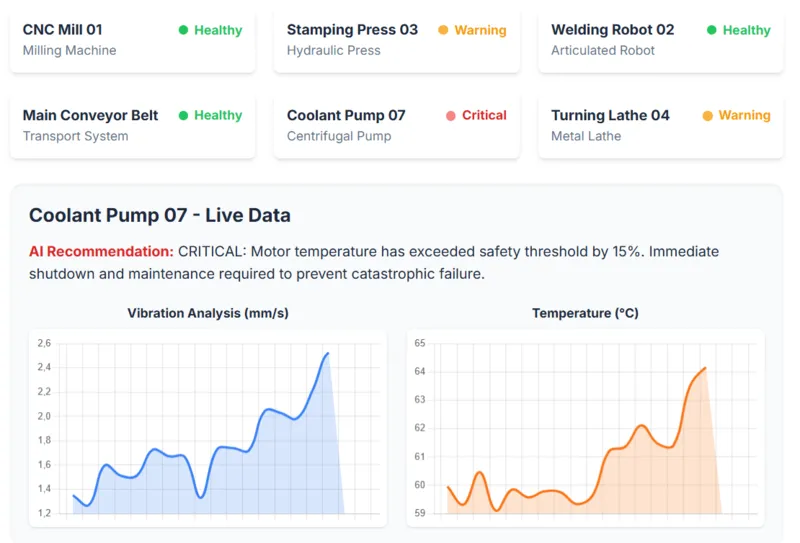
The core idea is simple: sensors capture condition data such as vibration, temperature, pressure, or flow. An AI model learns what normal operation looks like for a machine or asset and detects deviations early – often before a fixed-threshold alarm would even trigger. The next step goes beyond simple alerts: the system classifies what the deviation likely indicates. Is it a bearing or shaft issue, imbalance, cavitation, overheating, or another typical failure mode? And ultimately, it delivers what operators and maintenance teams care about most: a clear recommendation of what to do – and when it makes sense to do it. This makes it possible to move maintenance into a predictable time window and production can be ensured with minimal downtime.
This is particularly compelling in machinery and plant engineering because many assets can be retrofitted. Not every component needs to be new: often, a small number of strategically placed sensors is enough to monitor the most critical parts and reduce the biggest downtime risks first.
For more details, see our use case “With Predictive Maintenance to Minimized Machine Downtimes”.
3. AI Maintenance Assistant: When technicians stop searching and start solving
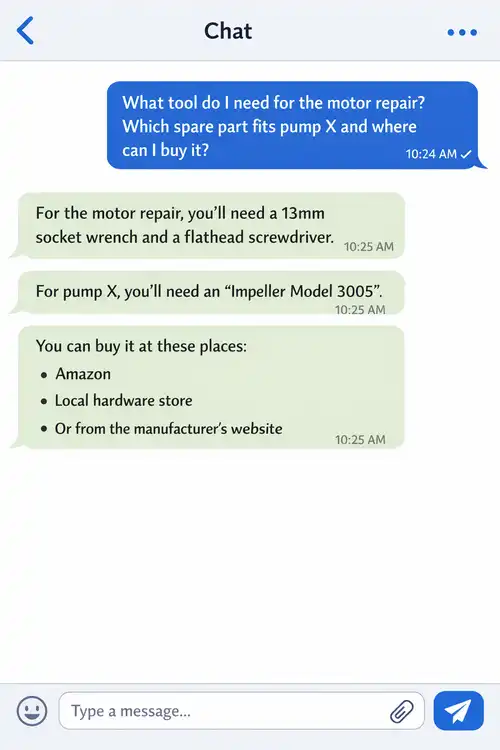
Maintenance isn’t only about tightening bolts and taking measurements – it often involves research: Which parts fit? Which steps apply to this specific variant? What torque values, lubricants, or tools are required for the repair? In practice, this knowledge is typically scattered across PDFs, manuals, bills of materials, emails, commissioning reports – or locked away in the heads of a few experts. That costs time, and it also means potentially critical information is often not found at all, which can lead to suboptimal repair decisions.
An AI Maintenance Assistant addresses exactly this challenge. Technicians can ask a question in natural language – just as they would explain it to a colleague – and receive an answer derived from the company’s internal documentation and data. The real power comes when the assistant does more than return plain text: it cites sources clearly (e.g., a specific manual chapter, drawing, or spare-parts list) and ideally supports the next step right away – such as identifying the correct spare part or initiating a supplier/shop search.
A typical example: “We’re seeing an anomaly on machine X in unit Y. Which inspection and replacement steps are specified, and which parts do I need?” Instead of spending an hour digging through documents, the technician can begin the right procedure within minutes – and avoid costly ordering mistakes. For teams running shift operations or managing a wide range of machine variants, this is often one of the fastest ways to shorten repair times and make knowledge broadly accessible.
4. Proactive service planning: Knowing today what next week will bring
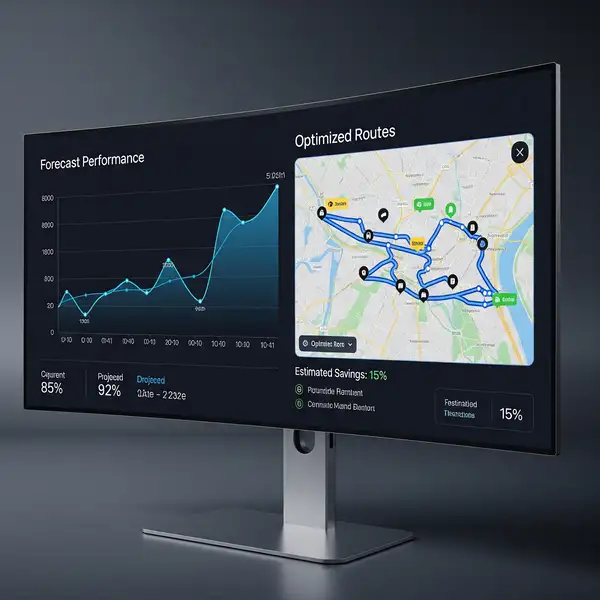
Many service organizations operate reactively: when a failure occurs, planning begins. This leads to workload spikes, overtime, suboptimal routing, and the constant feeling of firefighting instead of staying in control. AI-powered service planning uses historical data to estimate demand in advance: which machine types typically generate which service cases after what periods of use? Where do regional peaks occur? Which skills are needed more frequently?
In this way, AI can help allocate resources more intelligently, for example, by forecasting service volume and case types and deriving how many technicians with which qualifications are needed in which regions. It becomes even more valuable when used for scenario planning: what happens if you introduce a new product line, change a maintenance interval, or expand a region more aggressively? Instead of merely reacting, you can simulate measures and prepare strategically.
For OEMs in mechanical engineering with a large installed base, this creates a real competitive advantage: service becomes more reliable, faster, and more predictable.
5. AI Knowledge Hub: Your mechanical‑engineering knowledge as a single source of truth
In mechanical engineering, tremendous value is stored in knowledge: experiences from commissioning, lessons learned from service calls, customer-specific adaptations, drawings, bills of materials, documentation, and standards. The problem is rarely that this knowledge doesn’t exist. More often, it’s hard to find, not maintained consistently, or not usable across the organization. Internationally, additional challenges come into play – different languages, standards, and units – which makes things even more complex.
An AI Knowledge Hub makes this knowledge accessible by centralizing content and making it intelligently searchable. This can also include digitizing analog sources (e.g., via OCR), translation, contextual understanding, and – where useful – automatically converting units or aligning content with relevant standards. The impact is highly practical: employees find the right information faster, teams work more consistently, and knowledge stays within the company – even when experts move on.
Think of it this way: instead of a document repository, you get a system that delivers answers – in a form that’s truly usable in day-to-day work.
If you’d like to see a concrete example, we recommend taking inspiration from Theda: Theda is an AI assistant designed to support knowledge management and can be tailored specifically to the needs of your organization.
Which use cases should you start with?
If you want to get started quickly, we usually recommend beginning where the pain is greatest: If quality and scrap dominate, AI-based visual inspection is often the fastest lever for ROI. If downtime and expensive failures are the main challenge, predictive maintenance is the natural entry point. And if technicians are losing a lot of time searching for information, a maintenance assistant can deliver impact surprisingly fast – especially if it’s your team’s first touchpoint with AI.
That’s because AI assistants are often closer to people’s day-to-day work. Users tend to recognize the value quickly – and build trust that AI can genuinely make a meaningful difference on the shop floor.
Next step: A clear use‑case roadmap in 30–45 minutes
If you like, we can clarify in a short call:
- which of the five use cases has the highest leverage for you,
- which data is already available (or easy to add),
- and what a lean pilot looks like that delivers measurable results.